
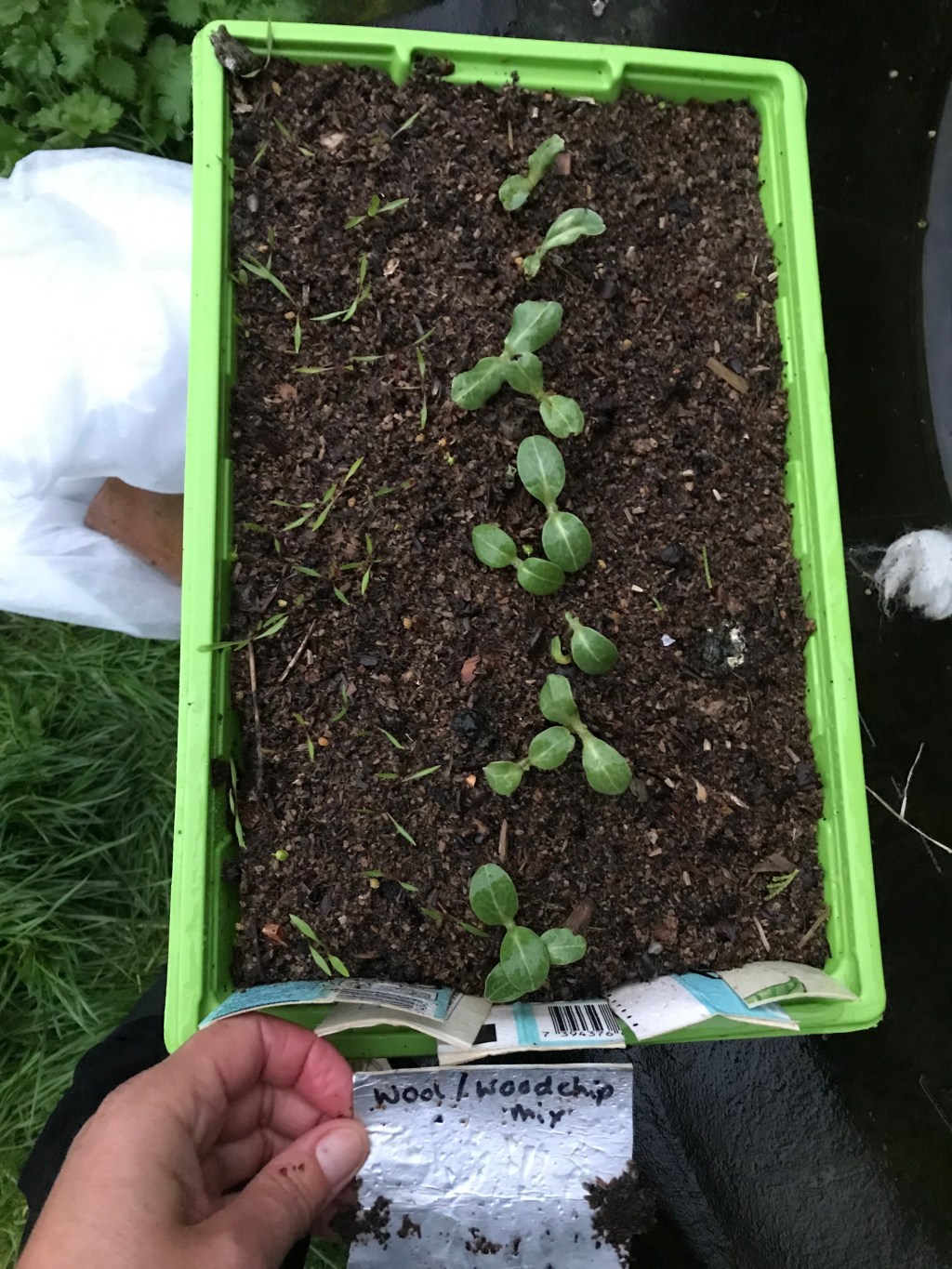
Woodchip was one of the stars of the 2023 Oxford Real Farming Conference. It popped up all over the place, including during a peat substitute talk where Iain Tolhurst explained how he uses it as a soil improver and growing medium for seeds. He mixes his with perlite to help with drainage but I didn’t happen to have any. I decided to experiment with using sheep’s wool. It didn’t mix well with the sifted and very old woodchip but we persisted. In the end we had three seed substrates to compare:
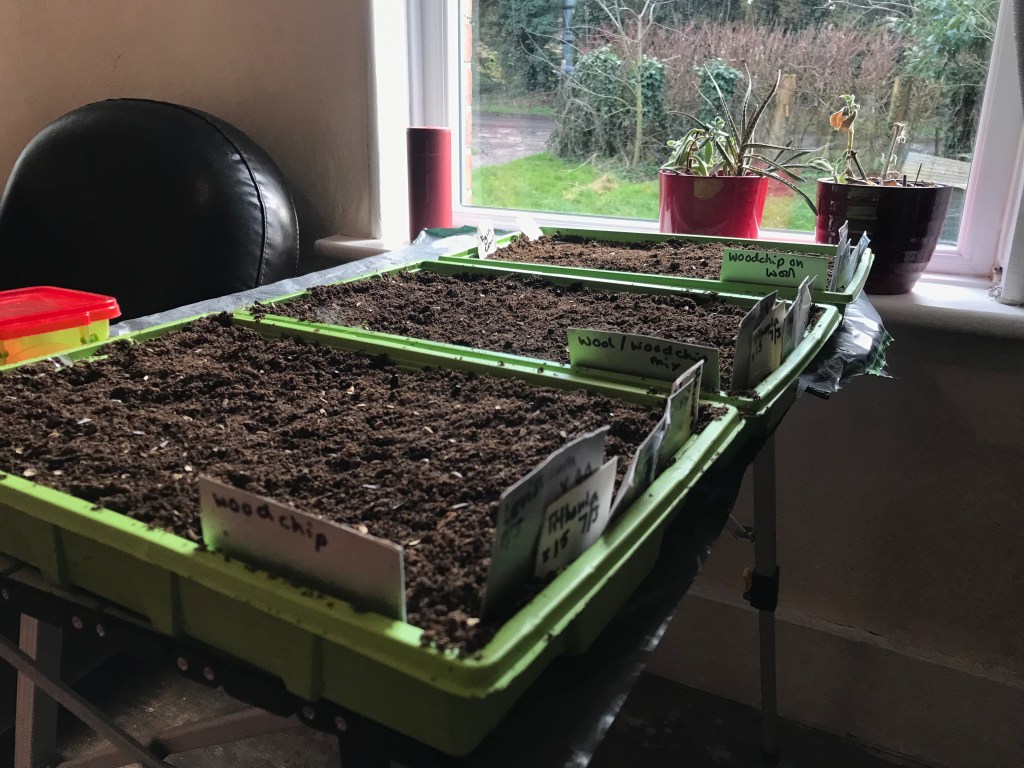
- 4cm pure woodchip
- 4cm woodchip mixed with sheep’s wool
- a 2cm layer of wool topped with 2cm of woodchip
Identical sets of seeds were sewn into each tray on the 7th March and they were rotated on a daily basis to ensure none of them benefited from extra light or heat.
- Set 1: lovage, Tithonia, globe artichoke, Echinacea and day lilies. Repeated in three trays with 3 different seed mixes.
- Set 2: fennel, Allium ursinum, Scorzonera, hyssop and viola ‘Bowles Black’. Again, planted in three trays.


Early results
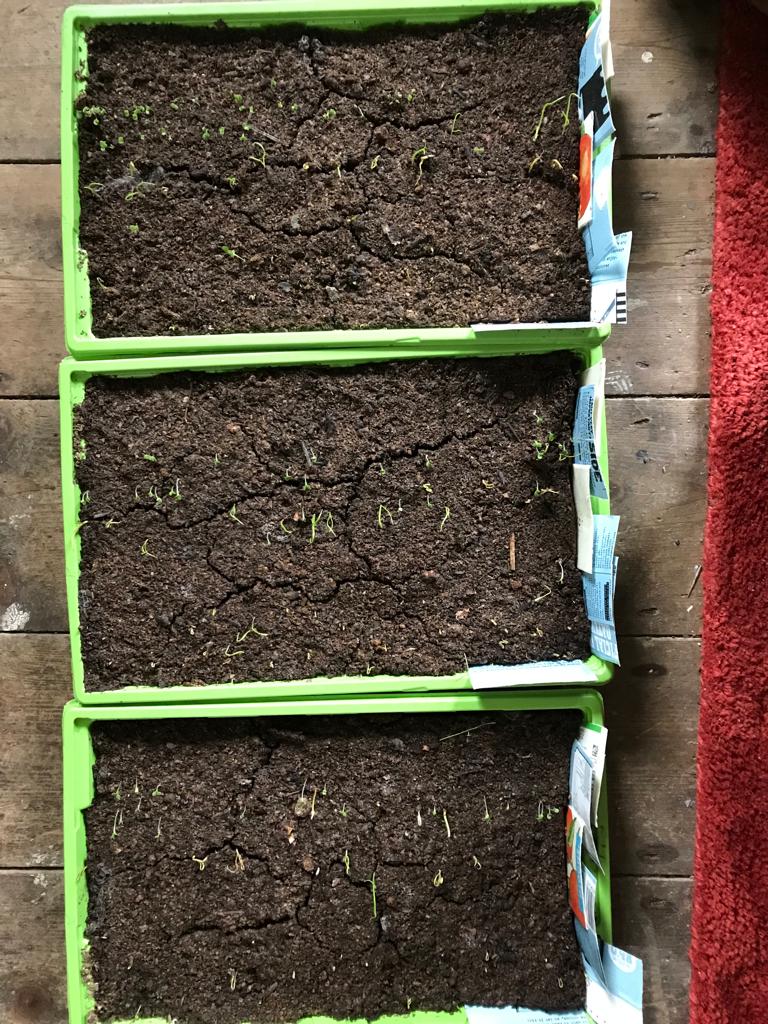
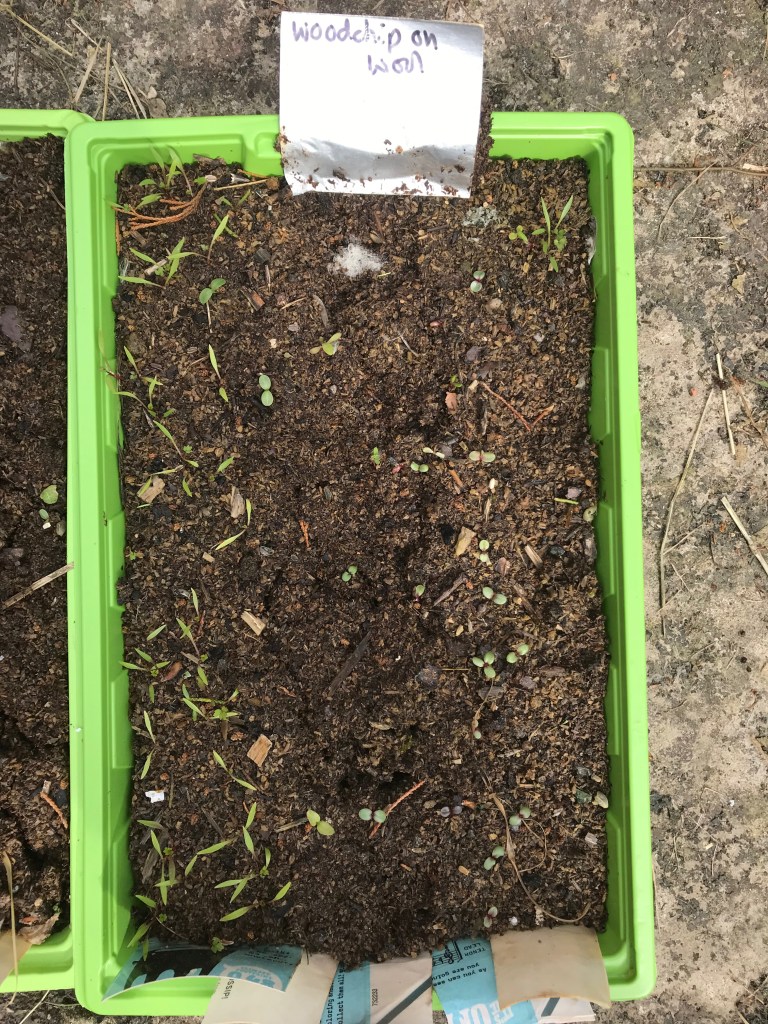
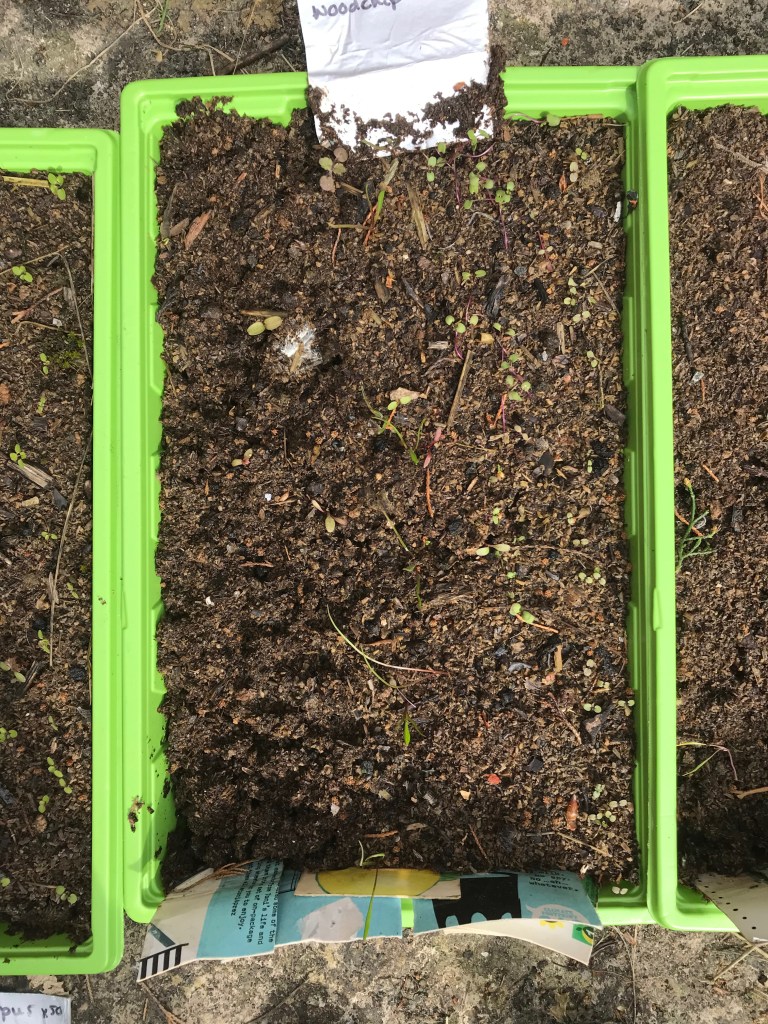
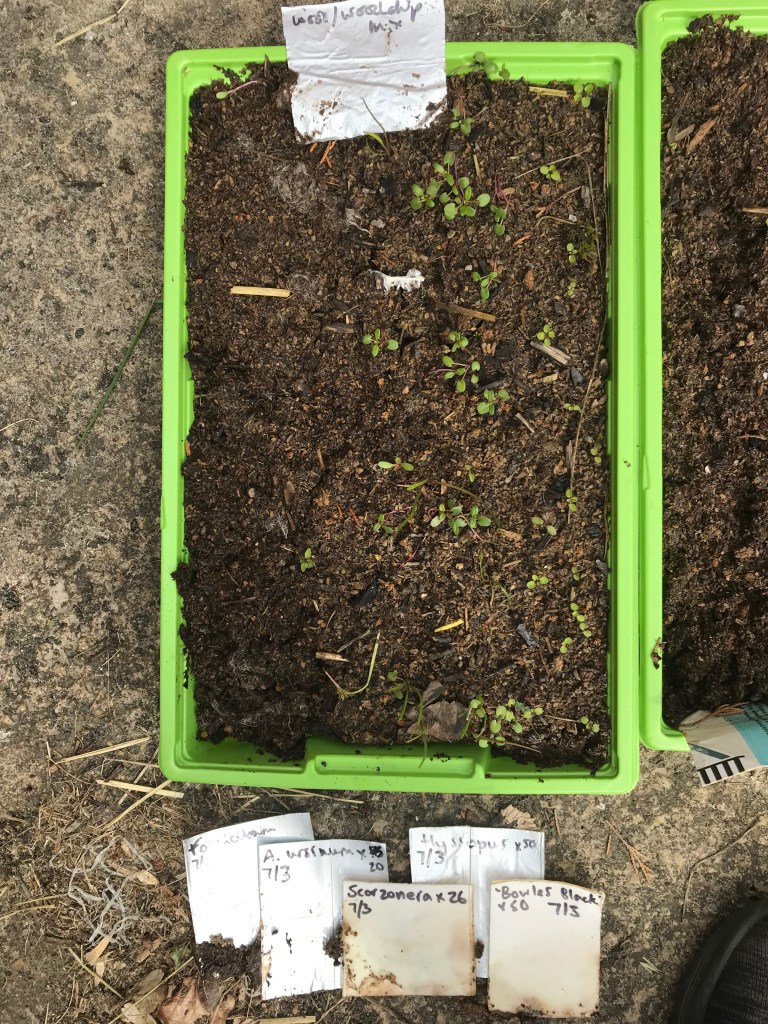
After 10 days some of the seeds had germinated, with pure woodchip proving the most successul medium – top tray in images below. The wool and chip mix is the middle tray and the woodchip layer on wool layer is bottom. Although most of the seedlings were be potted on, some were left in the tray. Hyssop and scorzonera werer the quickest to germinate.
We pricked out many of the lovage and artichoke seeds from tray 1 and the fennel and scorzonera from tray 2. Some of the seeds got moved outside once they’d been pricked out.
later Results
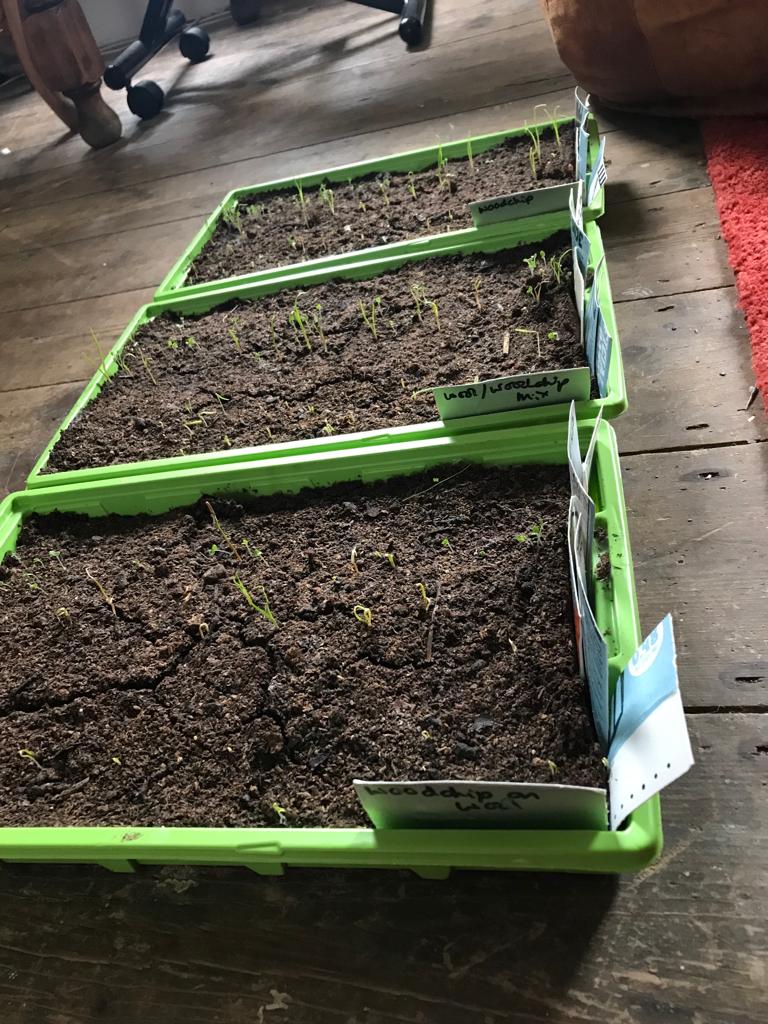
On 20th April, 6 weeks after sowing, some of the seedlings were big enough to transplant. In the first seed set, the artichoke and lovage were ready to prick out. The woodchip/wool mix looked like the best medium for those seedlings. In the second set, the fennel, scorzonera and violets had germinated. The scorzonera had already been pricked out by the time the photos below had been taken. It was clear that the fennel was only thriving in the pure woodchip tray. In the other two trays the plants had collapsed on weak stems. The violets at this stage seemed to be performing best in the woodchip/wool mix.


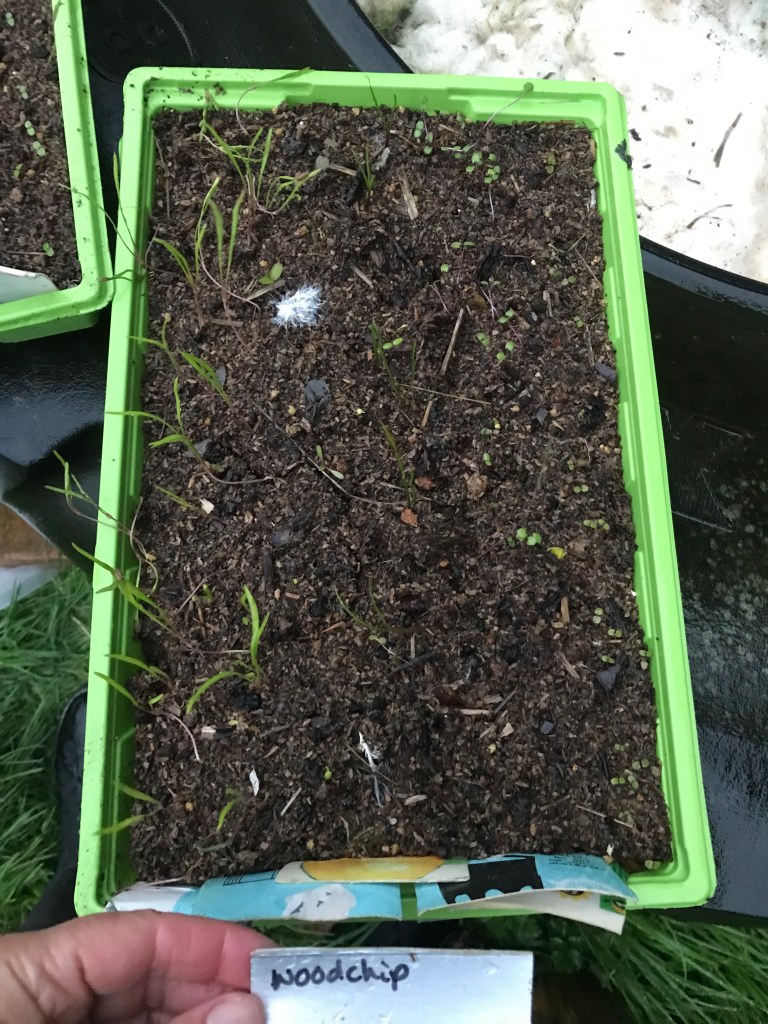
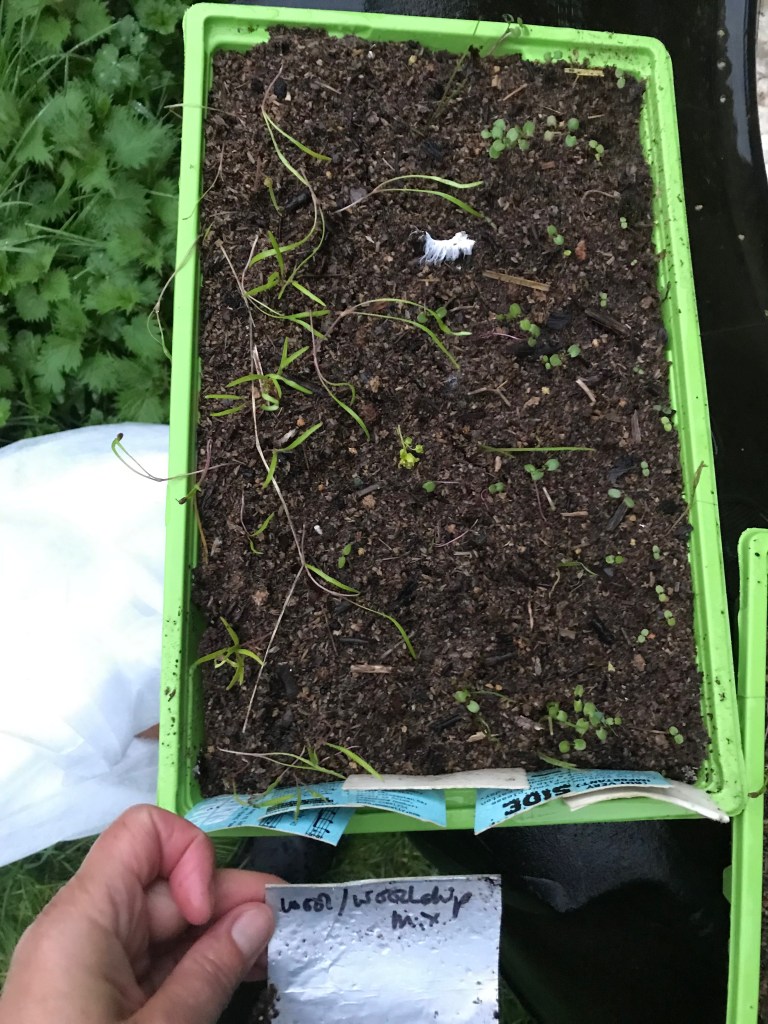
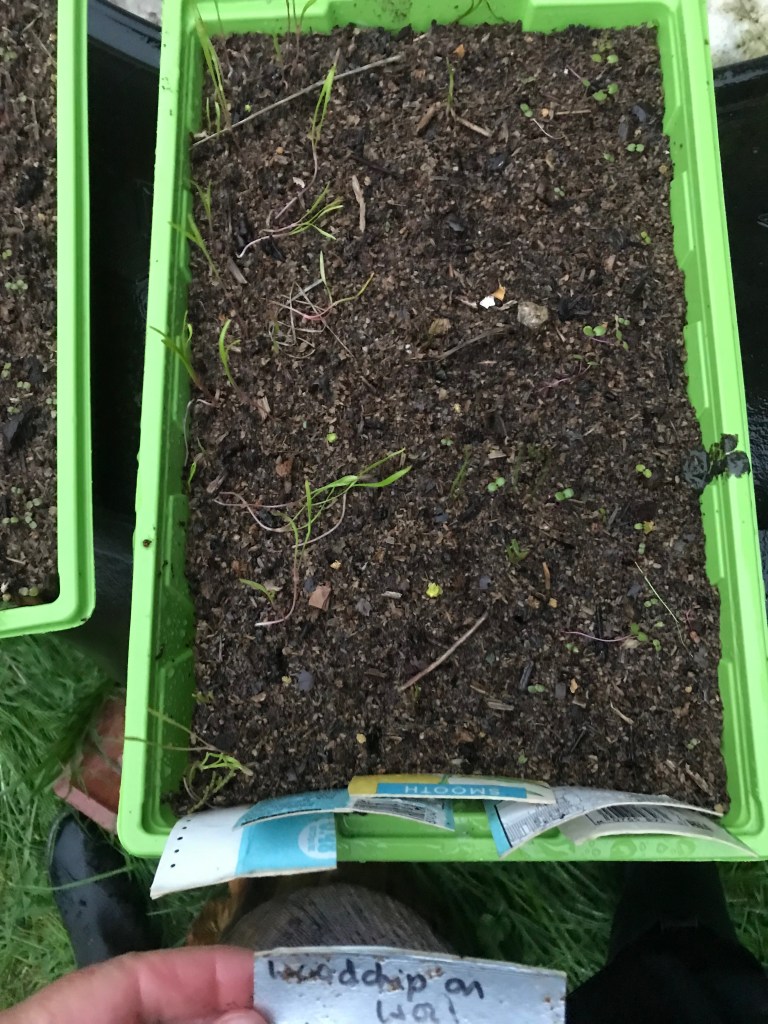
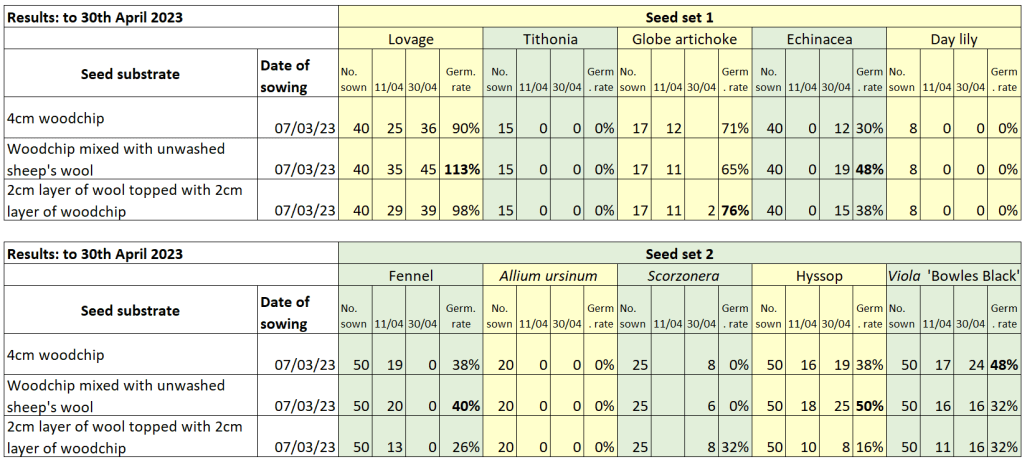
On 30th April, almost 8 weeks after sowing, I counted how many seeds had germinated. Apart from lovage and artichoke, none of the seedlings in the first set of trays were big enough to prick out. The Echinacea and lovage had germinated most in the wool woodchip mix.
In the second set of trays the wool woodchip mix seemed to have been best for hyssop – more had germinated and they were much bigger. The viola ‘Bowles Black’ had the highest germination rate in pure woodchip tray but the seedlings in the other two trays were larger and developing their first true leaves. All of the seeds apart from Allium ursinum had germinated.
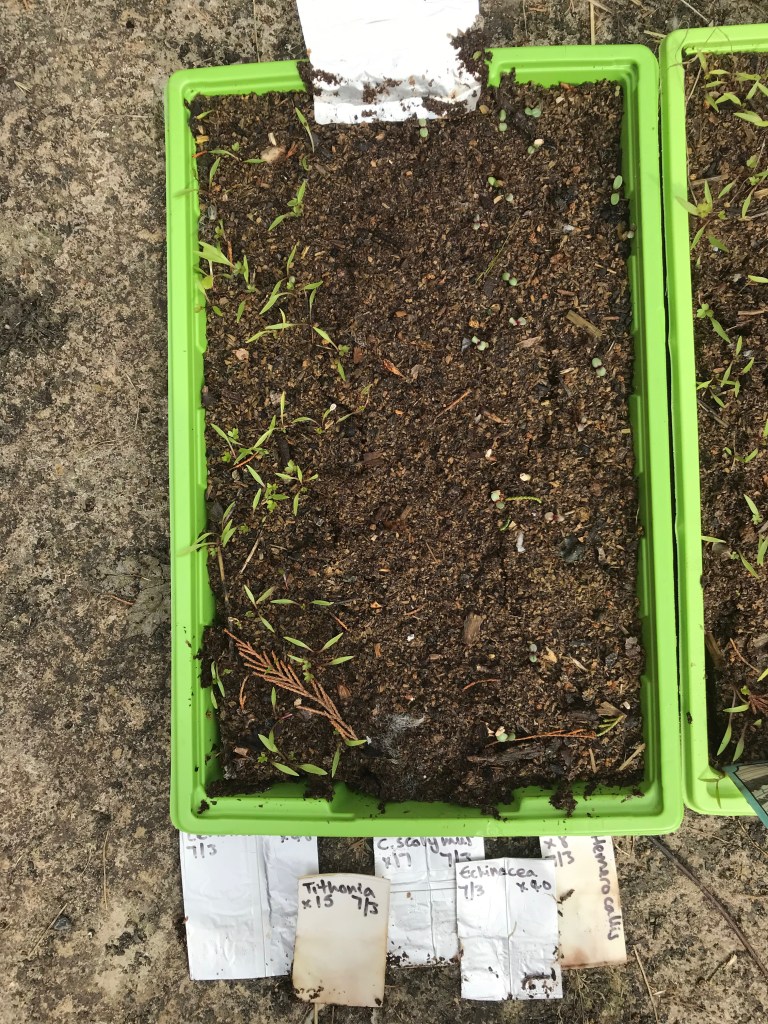
The seeds growing through woodchip into wool had generally done the least well and they were hard to prick out. When emptying the seed tray, many torn off root tips were visible below the wool layer.


Observations and Conclusions
- None of the seeds performed particularly well apart from the lovage and globe artichoke, with quite low germination rates over all.
- There were some unsegmented white roundworms about 8mm long in all of the trays – they could have been nematodes capable of eating plant roots.
- Because of the uneven germination timings it was hard to keep track of how many seedlings had been pricked out at earlier stages. Some appear to have had a germination rate of more than 100% which implies that the record keeping or seedling identification was at fault.
- Of the seeds sown, only viola seemed to prefer pure woodchip with more preferring a wool/woodchip mix.
- Raw wool might be a useful addition to a seed mix but it doesn’t combine easily with woodchip, tending to clump together.
- The roots of young seedlings get caught up in wool so it’s generally harder to prick out the seeds successfully.
 Edible Eastbrook