
Why do we love it?
At the moment, this fantastic resource is freely available. We’re massive fans and here’s why.
Stability
Woodchip protects the soil from extremes of temperature and moisture, providing stability that’s valued by plants. This benefit was particularly noticeable during the extremely hot and dry summer of 2022 when plants mulched with woodchip were noticeably more healthy.
Protection
Given that well structured, fertile soil takes centuries to create, it’s worth protecting soil from erosion caused by torrential rain or strong winds. Because of climate change there are more extreme weather events that put our soils at risk. In addition, woodchip protects soil from compaction from footfall and, to some extent, heavy machinery.
Fungi
Perennial and some annual plants prefer soil that has a good mix of fungi and bacteria – even tending towards fungal dominance. Adding woodchip will encourage this because there will be plenty of fungus food.
Nutrients
Although only moderately nutritious, woodchip provides some food for the diverse members of the soil food web. They in turn make nutrients available to our plants. One example of this: fungus eats woodchip, nematode eats fungus, springtail eats nematode, beetle eats Springtail, bird eats beetle. Plants eat poo from all of these! Feeding the soil food web with woodchip helps build deep and fertile soil.
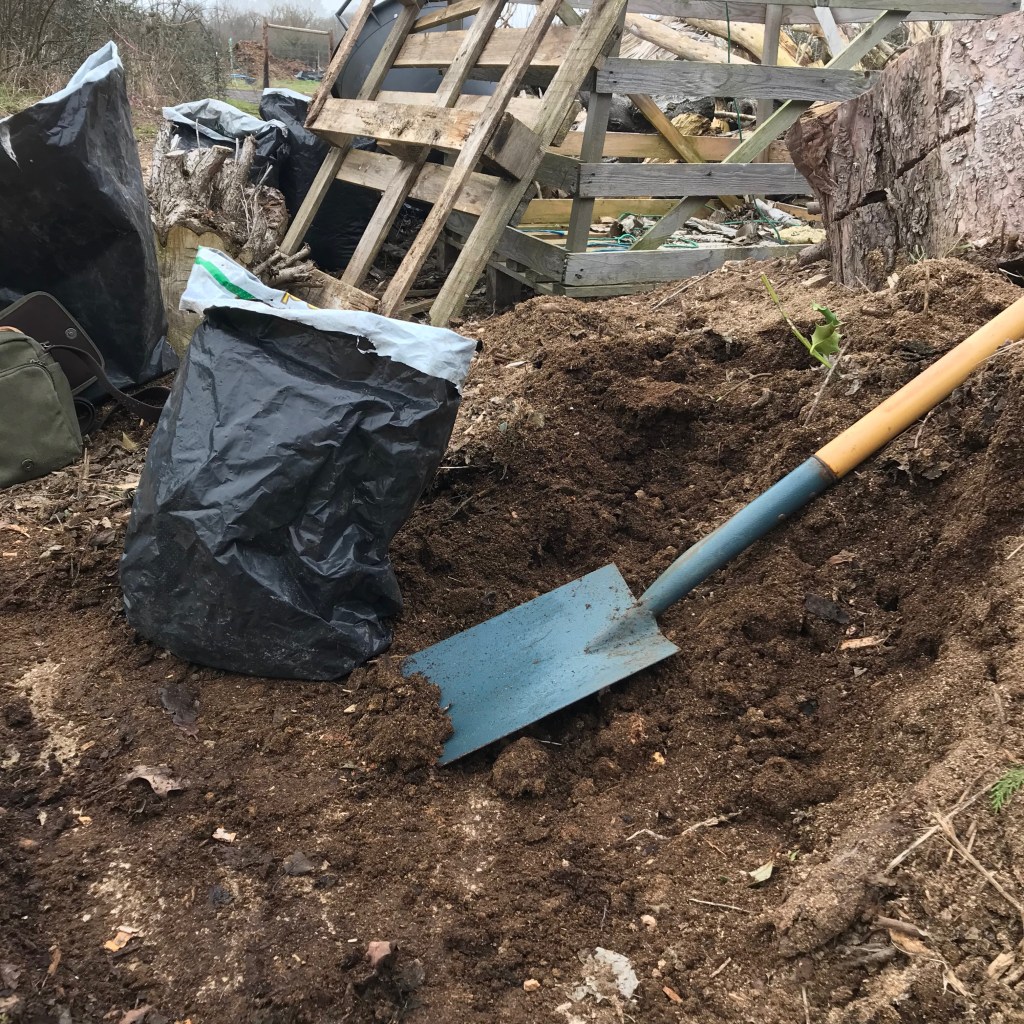
We use some of the really well rotted woodchip as a seed compost. For more information, Ben Raskin’s Woodchip Handbook is a great start.
 Edible Eastbrook